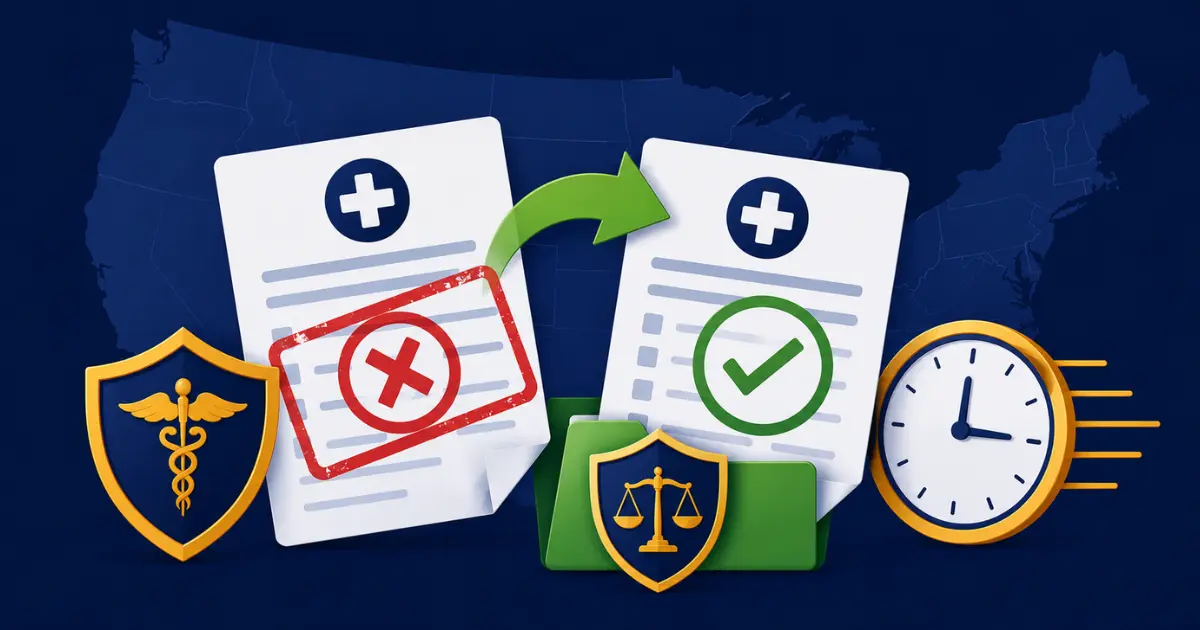
A prior authorization denial is not a final answer — it is an opening position. You have the right to appeal in every state and under federal law. For urgent medical situations, your insurer must respond to an expedited appeal within 72 hours. For standard appeals, response times range from 7 to 30 days depending on your state and plan type. The appeal that succeeds includes your physician’s clinical notes, the specific guideline the insurer used to deny, and a letter from your doctor explaining why you meet the medical necessity standard. Find your state’s exact rules below.
The surgery was scheduled for Tuesday. On Friday afternoon, the hospital called to say the prior authorization had been denied. No surgery without authorization. The scheduler offered to reschedule for three months out while the appeal played out.
Nina’s physician called it urgent. Nina called it terrifying. The insurer called it not medically necessary — based on a review by a physician who specialized in a different area of medicine than Nina’s condition.
What nobody told Nina in that moment: she had the right to an expedited appeal that required a response within 72 hours. Her physician could call the insurer’s medical director for a peer-to-peer review. The surgery was scheduled for Wednesday — one day after it was originally planned — because her doctor knew how to use those rights.
In New Jersey I have watched prior authorization denials delay cancer surgeries, mental health admissions, and critical medications. Most of those delays were not medically justified — they were administrative positions that collapsed the moment someone pushed back correctly.
Why Prior Authorization Exists — and Why It Gets Abused
Prior authorization was originally designed to prevent unnecessary and costly procedures. The theory: if a doctor has to justify a treatment before it is approved, wasteful spending decreases. The reality: insurers use prior authorization as a cost management tool, applying it to treatments their own clinical guidelines support, hoping that patients and physicians will not complete the paperwork required to fight back.
A 2023 AMA survey found that 94% of physicians reported prior authorization delays in patient care, and 33% said a patient had experienced a serious adverse event — including hospitalization — as a direct result of a prior authorization delay or denial.
The appeal process exists precisely because Congress and state legislatures recognized that prior authorization, when misused, causes real medical harm.
What Must Be in Your Appeal — The Core Requirements
Your physician’s letter of medical necessity. This is the foundation of every successful prior authorization appeal. The letter must specifically address the insurer’s stated reason for denial — not just assert that the treatment is needed. If they denied based on a clinical guideline, the physician’s letter must address that guideline directly and explain why your case meets or exceeds it.
The clinical guidelines the insurer used. Request the specific medical necessity criteria the insurer applied. They are required to provide these. Once you have them, your physician can address each criterion specifically in the appeal letter.
Peer-reviewed medical literature. Studies, clinical guidelines from professional medical associations, and published outcomes data supporting the treatment for your specific condition. Your physician should identify the most relevant literature — ideally from the insurer’s own listed clinical resources.
Your complete medical history relevant to the claim. Showing the progression of your condition, previous treatments tried and failed, and why the requested treatment is the appropriate next step — not a first resort.
A request for peer-to-peer review. Your physician has the right to speak directly with the insurer’s medical reviewer. Peer-to-peer conversations resolve a significant portion of prior authorization denials — physician to physician, with clinical detail that a written denial letter cannot address. Request this immediately after any denial.
Prior Authorization Appeal Rights — All 50 States 2026
| State | Standard / Expedited Deadlines | State Law + Key Protections |
|---|---|---|
| Alabama | 30 days / 72 hours | ACA federal standards apply. AL DOI oversees fully-insured plans. ERISA plans follow federal rules. Expedited review within 72 hours for urgent situations. External review available. |
| Alaska | 30 days / 72 hours | Federal ACA standards apply. AK DOI oversees state-regulated plans. Peer-to-peer review available. External review through certified independent organization. |
| Arizona | 14 days / 72 hours | ARS 20-2537 requires decisions within 14 days for standard and 72 hours for expedited. ICA enforces. Must provide written denial with specific clinical reasons. Peer-to-peer available within 1 business day of request. |
| Arkansas | 3 business days / 1 business day | Arkansas Act 543 requires prior auth decisions within 3 business days standard, 1 business day urgent. Commissioner enforces. One of the faster state response requirements. |
| California | 5 days / 72 hours | California is one of the strongest states for prior auth protections. DMHC requires decisions within 5 business days standard, 72 hours urgent, and 8 hours for imminent or serious threat to health. Peer-to-peer must be offered. Denial must cite specific clinical criteria. IMR (Independent Medical Review) available through DMHC at no cost to patient. |
| Colorado | 14 days / 72 hours | Colorado HB 22-1227 strengthened prior auth requirements. Decisions within 14 days standard, 72 hours urgent. Peer-to-peer must be offered. Gold carding available — physicians with high approval rates can be exempt from prior auth for certain services. |
| Connecticut | 15 days / 72 hours | CGS 38a-591d requires decisions within 15 days standard, 72 hours urgent. CID enforces. Written denial must include clinical basis and appeal instructions. External review available. |
| Delaware | 15 days / 72 hours | Delaware regulations require decisions within 15 days standard, 72 hours urgent. DOI enforces. Peer-to-peer review available. External review through certified organization. |
| Florida | 3 business days / 1 business day | FS 627.6131 requires decisions within 3 business days standard, 1 business day urgent for fully-insured plans. OIR enforces. Peer-to-peer must be offered within 1 business day of denial. Strong state protections for prior auth. |
| Georgia | 15 days / 72 hours | Georgia regulations require decisions within 15 days standard, 72 hours urgent. OCI enforces. Written denial must state specific reason and appeal rights. External review available. |
| Hawaii | 5 days / 1 business day | HRS 432E-1.4 requires decisions within 5 days standard, 1 business day urgent. Insurance Division enforces. Strong prior auth protections for state-regulated plans. |
| Idaho | 15 days / 72 hours | Federal ACA standards supplemented by state regulations. DOI enforces. Decisions within 15 days standard, 72 hours urgent. External review available. |
| Illinois | 10 days / 1 business day | 215 ILCS 134 requires decisions within 10 business days standard, 1 business day for urgent. IDOI enforces. Peer-to-peer must be offered. Gold carding available for high-performing physicians. Strong state protections. |
| Indiana | 15 days / 72 hours | IC 27-8-29 requires decisions within 15 days standard, 72 hours urgent. IDOI enforces. Written denial must include clinical basis. External review available. |
| Iowa | 15 days / 72 hours | Iowa regulations require decisions within 15 days standard, 72 hours urgent. IID enforces. External review available through certified organization. |
| Kansas | 15 days / 72 hours | Kansas regulations require decisions within 15 days standard, 72 hours urgent. Insurance Commissioner enforces. External review available. |
| Kentucky | 14 days / 72 hours | KRS 304.17A-623 requires decisions within 14 days standard, 72 hours urgent. DOI enforces. Peer-to-peer available. External review through certified organization. |
| Louisiana | 5 days / 1 business day | RS 22:1821 requires decisions within 5 business days standard, 1 business day urgent. LDI enforces. Peer-to-peer must be offered. One of the faster required response times. |
| Maine | 15 days / 72 hours | 24-A MRSA 4313 requires decisions within 15 days standard, 72 hours urgent. Bureau of Insurance enforces. Written denial must include clinical criteria used. External review available. |
| Maryland | 5 days / 24 hours | Maryland Insurance Code 15-803 requires decisions within 5 business days standard, 24 hours for urgent. MIA enforces. Peer-to-peer must be offered. Denial must include specific clinical basis. External review available. Strong state protections. |
| Massachusetts | 3 business days / 1 business day | MGL 176O requires decisions within 3 business days standard, 1 business day urgent. DOI enforces. Peer-to-peer must be offered within 1 business day of denial. External review widely available. One of the stronger prior auth states. |
| Michigan | 14 days / 72 hours | MCL 550.1900 requires decisions within 14 days standard, 72 hours urgent. DIFS enforces. Peer-to-peer available. External review through certified organization. |
| Minnesota | 5 days / 1 business day | Minn. Stat. 62Q.73 requires decisions within 5 business days standard, 1 business day urgent. Commerce Department enforces. Peer-to-peer must be available. Strong state protections. |
| Mississippi | 15 days / 72 hours | Federal ACA standards apply with state regulations. MID enforces. Decisions within 15 days standard, 72 hours urgent. External review available. |
| Missouri | 3 business days / 1 business day | RSMo 376.1395 requires decisions within 3 business days standard, 1 business day urgent. DIFP enforces. Peer-to-peer must be offered. One of the faster response requirements. |
| Montana | 15 days / 72 hours | MCA 33-22-706 requires decisions within 15 days standard, 72 hours urgent. CSI enforces. Written denial must state clinical basis and appeal rights. External review available. |
| Nebraska | 15 days / 72 hours | Federal ACA standards supplemented by state regulations. NDOI enforces. Decisions within 15 days standard, 72 hours urgent. External review available. |
| Nevada | 5 days / 72 hours | NRS 689A.0422 requires decisions within 5 business days standard, 72 hours urgent. DOI enforces. Peer-to-peer must be offered. External review available. Strong state protections. |
| New Hampshire | 15 days / 72 hours | RSA 420-J:6 requires decisions within 15 days standard, 72 hours urgent. Insurance Department enforces. Written denial must include clinical basis. External review available. |
| New Jersey | 5 days / 48 hours | NJSA 26:2S-11 requires decisions within 5 business days standard, 48 hours urgent. DOBI enforces. Peer-to-peer must be offered within 1 business day. Denial must cite specific clinical criteria used. External independent review available through DOBI. One of the stronger prior auth states. |
| New Mexico | 14 days / 72 hours | NMSA 59A-22C-8 requires decisions within 14 days standard, 72 hours urgent. OSI enforces. Peer-to-peer available. External review through certified organization. |
| New York | 3 business days / 1 business day | NY Insurance Law 4905 requires decisions within 3 business days standard, 1 business day urgent. DFS enforces. Peer-to-peer must be offered within 1 business day. Adverse determination must include specific clinical criteria and appeal instructions. External review through DFS. Very strong state protections. |
| North Carolina | 3 business days / 1 business day | NCGS 58-3-227 requires decisions within 3 business days standard, 1 business day urgent. NCDOI enforces. Peer-to-peer must be available. Denial must cite specific clinical basis. External review available. |
| North Dakota | 15 days / 72 hours | NDCC 26.1-36-09.4 requires decisions within 15 days standard, 72 hours urgent. Insurance Department enforces. External review available. |
| Ohio | 2 business days / 1 business day | ORC 3922.14 requires decisions within 2 business days standard, 1 business day urgent. ODI enforces. Peer-to-peer must be available within 1 business day. One of the faster required response times. External review available. |
| Oklahoma | 3 business days / 1 business day | 36 OS 6475.7 requires decisions within 3 business days standard, 1 business day urgent. OID enforces. Peer-to-peer must be offered. External review available. |
| Oregon | 14 days / 72 hours | ORS 743B.001 requires decisions within 14 days standard, 72 hours urgent. DCBS enforces. Peer-to-peer must be offered. External review through certified organization. Strong state protections. |
| Pennsylvania | 15 days / 72 hours | 40 PS 991.2162 requires decisions within 15 days standard, 72 hours urgent. PID enforces. Peer-to-peer must be available. Written denial must cite specific criteria. External review available. Strong enforcement tradition. |
| Rhode Island | 15 days / 72 hours | RIGL 27-18-76 requires decisions within 15 days standard, 72 hours urgent. Insurance Department enforces. External review available. Peer-to-peer available. |
| South Carolina | 3 business days / 1 business day | SCCA 38-71-1945 requires decisions within 3 business days standard, 1 business day urgent. SCDOI enforces. Peer-to-peer must be offered. External review available. |
| South Dakota | 15 days / 72 hours | Federal ACA standards supplemented by state regulations. Insurance Division enforces. Decisions within 15 days standard, 72 hours urgent. External review available. |
| Tennessee | 3 business days / 1 business day | TCA 56-32-126 requires decisions within 3 business days standard, 1 business day urgent. TDCI enforces. Peer-to-peer must be offered within 1 business day. External review available. |
| Texas | 5 days / 1 business day | Texas Insurance Code 4201 requires decisions within 5 business days standard, 1 business day urgent. TDI enforces. Peer-to-peer must be offered within 1 business day of denial. Denial must include specific clinical basis and criteria. External review available. Strong state protections for prior auth. |
| Utah | 10 days / 72 hours | UC 31A-22-617 requires decisions within 10 days standard, 72 hours urgent. Insurance Department enforces. Peer-to-peer available. External review through certified organization. |
| Vermont | 3 business days / 1 business day | 8 VSA 4089e requires decisions within 3 business days standard, 1 business day urgent. DFR enforces. Peer-to-peer must be offered. External review available. Strong consumer protections. |
| Virginia | 5 days / 1 business day | VA Code 38.2-3556 requires decisions within 5 business days standard, 1 business day urgent. SCC Bureau of Insurance enforces. Peer-to-peer must be available within 1 business day. External review available. |
| Washington | 3 business days / 1 business day | RCW 48.43.535 requires decisions within 3 business days standard, 1 business day urgent. OIC enforces. Peer-to-peer must be offered within 1 business day. Written denial must cite specific clinical criteria. External review widely available. Very strong state protections. |
| West Virginia | 15 days / 72 hours | WV Code 33-25F-9 requires decisions within 15 days standard, 72 hours urgent. OIC enforces. Written denial must include clinical basis. External review available. |
| Wisconsin | 10 days / 72 hours | Wis. Stat. 632.835 requires decisions within 10 business days standard, 72 hours urgent. OCI enforces. Peer-to-peer available. External review through certified organization. |
| Wyoming | 15 days / 72 hours | Federal ACA standards apply with state supplements. DOI enforces. Decisions within 15 days standard, 72 hours urgent. External review available. |
What Actually Happened to Nina in New Jersey
Nina’s spine surgeon had requested prior authorization for a surgical procedure to address a herniated disc that was causing progressive nerve damage. The insurer denied it — citing a clinical guideline that required six weeks of conservative treatment before surgery would be authorized. Nina had already completed four months of conservative treatment, documented in her chart.
Her surgeon called the insurer the morning after the denial and requested a peer-to-peer review. Under New Jersey law, the insurer must offer this within one business day. The peer-to-peer was conducted that afternoon — her surgeon spoke directly with the insurer’s medical reviewer, walked through the four months of documentation, and cited the clinical guideline the insurer had referenced. The reviewer acknowledged that the guideline requirement had already been met.
Authorization was granted that evening. Surgery proceeded the next morning as originally scheduled.
The denial was not based on the facts. It was based on a template that assumed conservative treatment had not been tried. The peer-to-peer review took twelve minutes and corrected an error that would have delayed Nina’s surgery by weeks.
Questions People Ask About Prior Authorization Appeals
What is a peer-to-peer review and does my doctor have to do it?
A peer-to-peer review is a direct phone conversation between your treating physician and the insurer’s medical reviewer. Your doctor has the right to request one in virtually every state after a prior authorization denial — and in many states the insurer must offer it proactively. Your physician does not have to do it, but it is one of the most effective tools for overturning a denial. Physicians who participate in peer-to-peer reviews report high reversal rates for denials that were based on incomplete information.
What is gold carding and does my state have it?
Gold carding is a policy — now law in several states including Colorado, Illinois, Texas, and others — that exempts physicians with high prior authorization approval rates from having to request authorization for services they routinely get approved. If your physician is gold carded by your insurer for a particular service, they can proceed without prior authorization. Ask your physician’s office whether they are gold carded for the requested service.
My insurer says the treatment is experimental. Is that a valid denial reason?
It depends on what the evidence shows. “Experimental” is a specific legal and clinical term — a treatment is experimental if it lacks peer-reviewed evidence of safety and efficacy for your condition. If published clinical guidelines from recognized medical associations support the treatment for your specific condition, “experimental” is not a valid denial. Request the specific clinical criteria the insurer used and compare them to published guidelines from the relevant medical specialty association.
Can I go ahead with the treatment without authorization and fight for reimbursement later?
For non-emergency situations — this is risky. If you receive treatment without authorization and the insurer denies the claim, you may owe the full cost. For emergency situations, you have stronger rights — emergency care cannot be denied after the fact based on lack of prior authorization in most circumstances. For urgent but non-emergency situations, the expedited appeal process is the right path — a 72-hour response requirement is much faster than waiting for elective appointment timelines.
What if the insurer’s reviewer is not a specialist in my condition?
This is a significant and legitimate appeal argument. Most states require that adverse determinations — especially for specialized conditions — be reviewed by a clinician with relevant expertise. If a general internist reviewed your oncology treatment request and denied it, request that a board-certified oncologist review the appeal. Document this request in writing. Several states specifically require peer review by a same-specialty physician for complex or specialized treatments.
Centers for Medicare and Medicaid Services (CMS) ·
Healthcare.gov — Appeals and Grievances ·
American Medical Association — Prior Authorization Reform ·
State Insurance Department Official Websites
📋 Disclaimer: The information on this page is for general educational purposes only and does not constitute legal or medical advice. Prior authorization laws and deadlines vary by state and plan type and change regularly. The information here reflects our research as of early 2026. Always verify current rules with your state insurance department or a licensed healthcare attorney. USARoundup.com is not a law firm and does not provide legal representation of any kind.
Last reviewed and updated for 2026 · USARoundup.com